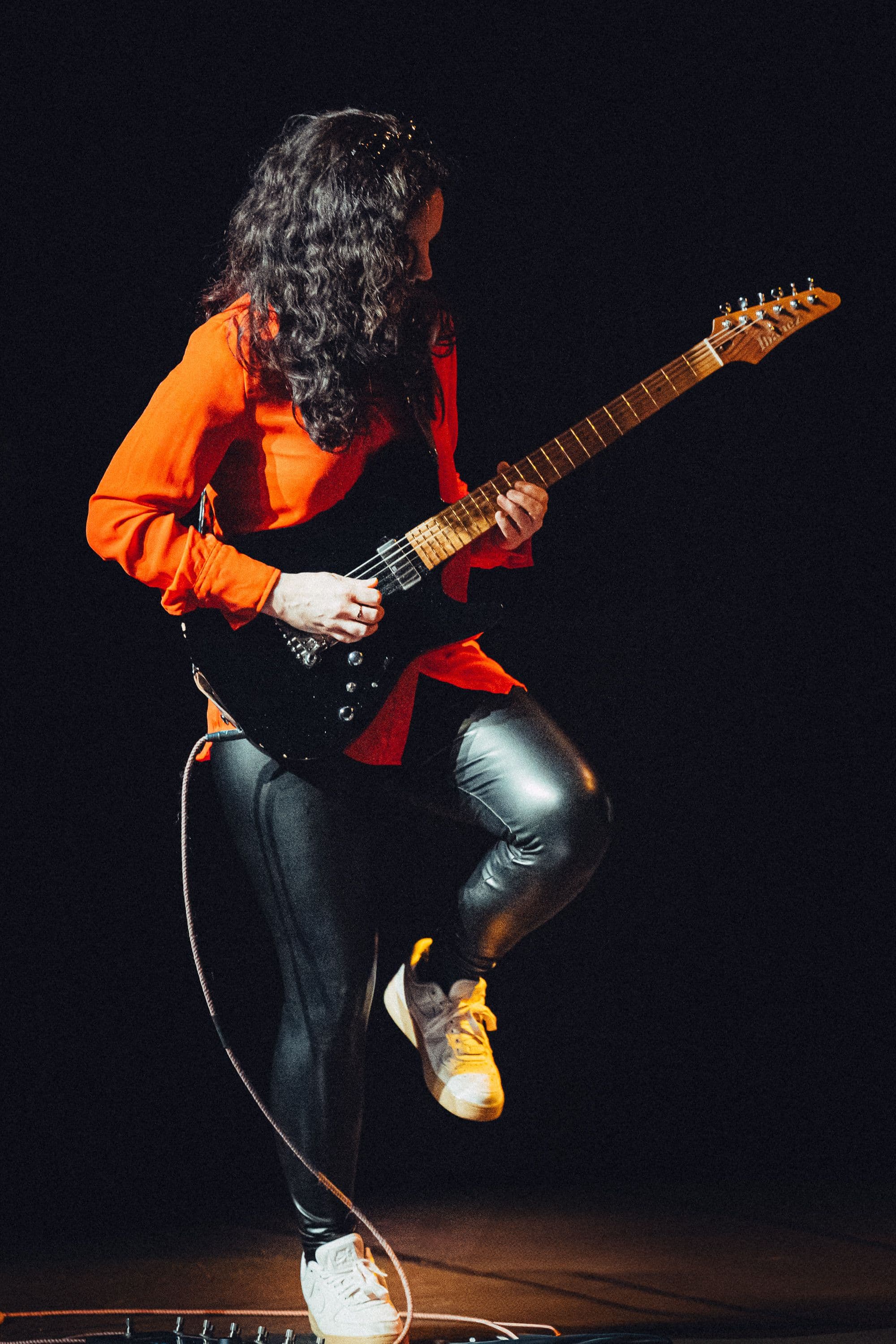
Strings and Self
Launching my own trio felt like a leap — not just musically, but personally. It’s not just about playing anymore; it’s about leading, shaping a vision, and staying true to it. That’s the challenge, and the joy.
Anouck André 🇫🇷


 Tell us what’s new in your musical journey since we last spoke. How has your vision evolved?
What’s new in my musical journey is that I’ve decided to launch my own trio.
I’d say that it’s the biggest news — it’s something I had been wanting to do for a long time, but it took me a while to fully embrace the idea of taking the lead on a project.
Part of me just wasn’t ready yet, so I waited until it felt right inside to take that step.
It’s definitely a lot of work, because it’s not just about the music — there’s also everything around it, like promotion and all the logistics that come with running a band.
But I’m really happy I made that decision, because playing in a group brings a much more vibrant, dynamic energy to my tunes.
You mentioned that every artist must find their own voice to avoid becoming “a counterfeiter.” What do you do today to keep your artistic voice honest and evolving?
For a long time, I tried to imitate the guitarists who inspire me — with mixed results 😂
I spent hours listening to records, watching videos, transcribing licks… At some point, I realized I could do that forever, but it might not be what would actually help me find my own path.
I really believe that composing is what helps you discover who you are as a musician.
As for honesty in music, it’s not always the easiest route — sometimes you have to let go of a certain kind of ego, and accept the musician you are, instead of holding on to the guitarist you wish you were.
That’s something I try to keep in mind when I write: I focus on what feels beautiful and meaningful to me, rather than what might just sound “impressive.”
You’ve performed with iconic artists and on amazing stages — which moment in the last year made you stop and think, “This is why I do this”?
There have been several meaningful moments, especially the two times I had the chance to share the stage with Juan Carmona.
He was, for me, a name on an album cover — someone I admired deeply — so meeting and playing with him was truly an incredible experience.
Do you still listen to unfamiliar music every morning with your coffee? Has this ritual changed or deepened your musical palette lately?
I still do it from time to time, but a bit less often now. That ritual has temporarily been replaced by 10 minutes of Duolingo to learn Spanish 😂
Also I’m lucky to have a fiancé with really eclectic taste in music — he’s always introducing me to new things, across all kinds of styles.
It’s helped me discover artists and bands I had never heard of before, and it’s definitely broadened my musical perspective.
Improvisation seems to have become a bigger part of your musical life — what draws you to it, and how do you approach it mentally when performing live?
It’s true, I’ve always really loved improvisation. It still feels like a work in progress for me.
When I listen to someone like Sylvain Luc, I get the feeling I’ve missed out on what I deeply wish I could do with the guitar — you know, that total freedom.
I’m still working toward that, but I’m lacking some knowledge, and also a certain freedom from the rules.
Sometimes it’s easier to experiment at home, where there’s no pressure, than on stage.
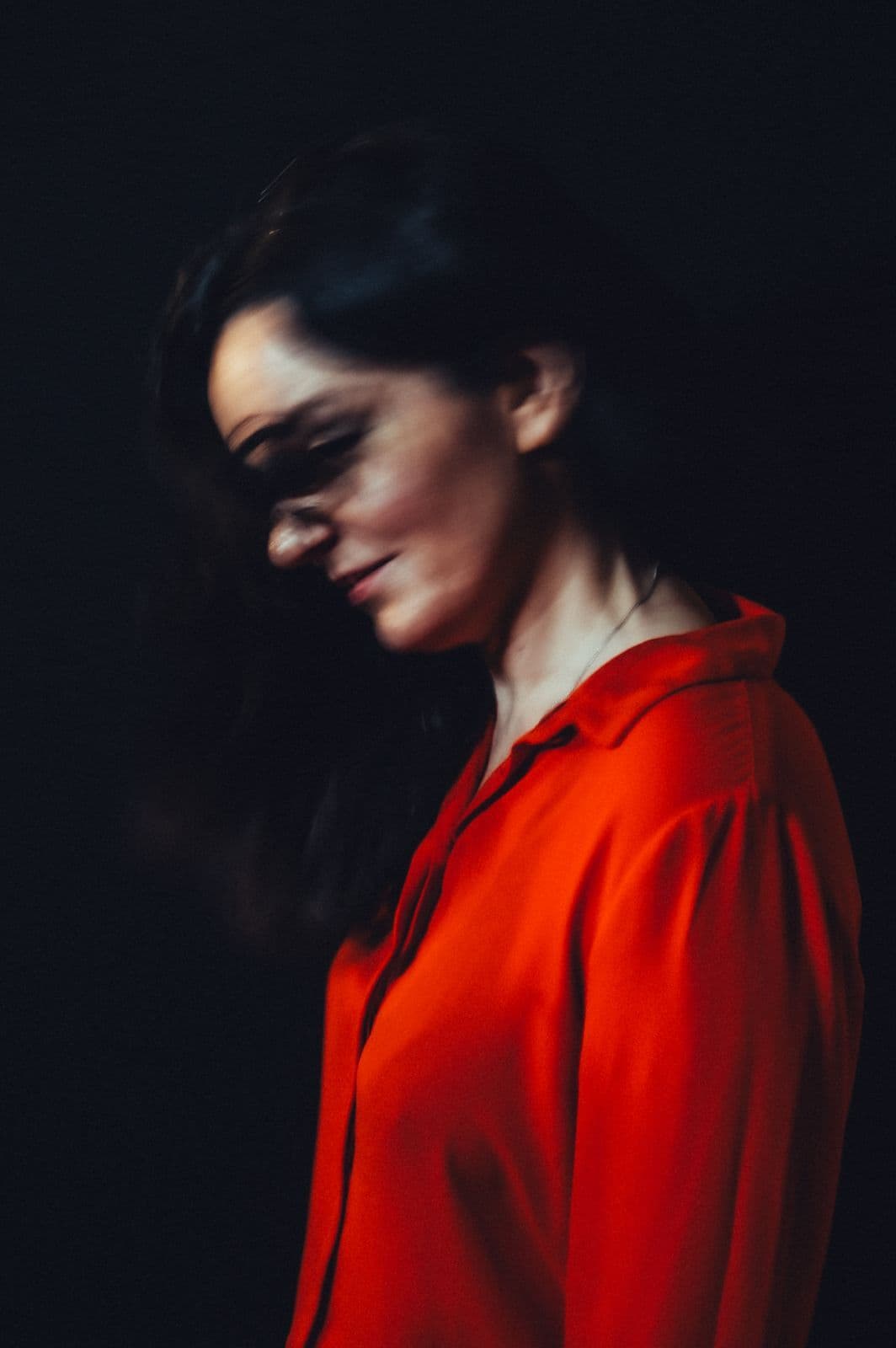
Photo Credit: Olivier Hoffschir
You’ve described versatility as a key to success. What’s one musical skill or style you’ve picked up recently that challenged you most?
Percussive fingerstyle guitar is a real challenge for me. I’ve tried it remotely, but without much success. I think the techniques are too far from my natural playing style, and it would require a huge amount of work that I unfortunately don’t have time for right now.
That being said, I really enjoy listening to and watching guitarists like Marcin, for example.
This style offers so many possibilities and so much freedom!
With the rise of quick content and viral music, how do you maintain the depth and intention in your craft without falling into “scroll culture”?
I have a bit less time than before to produce videos, so I’ve decided to keep only the ones that really mean something to me. There are so many talented people on social media with extraordinary skills, and I feel like it would be a waste of time trying to promote myself with content that doesn’t really represent who I am. I’ve chosen, rightly or wrongly, to try to stay true to the style that reflects me.
You’ve written about the difficulties female musicians face in a still-male-dominated space. Has anything in the industry shifted since then, for better or worse?
I’m happy to see that there are more and more female musicians nowadays, across all instruments. I also notice it with my students — the ratio between men and women is starting to almost balance out.
When it comes to challenges, there’s still some everyday sexism, but I feel like mindsets are changing.
I think it will still take time, but the shift has started, and that gives me hope for the generations to come.
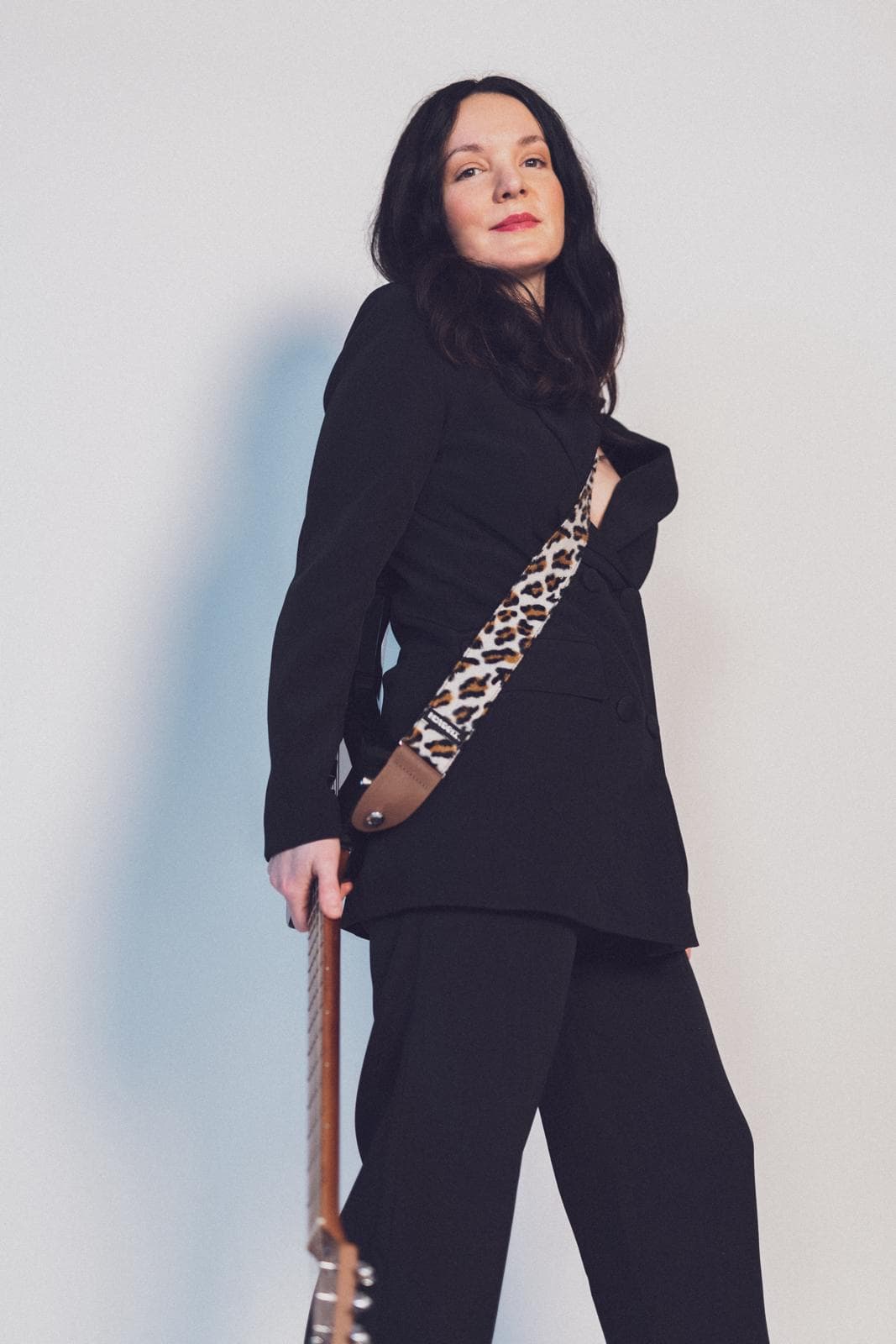
Photo Credit: Marina Viguier
Do you find teaching helps fuel your creativity or drains it? How do you balance giving to others while keeping your own artistic spark alive?
I really enjoy teaching and sharing what I know. Luckily, nowadays I mostly teach people who want to develop some pretty specific skills.
For a long time, I was teaching in a music school where all my students were kids. Don’t get me wrong, I love children — but sometimes my Wednesdays felt really long because it felt like I was repeating the same lesson over and over.
Now, I find it much more stimulating to teach more advanced lessons, and it’s incredibly rewarding when I manage to explain something to a student and see the light bulb go on in their eyes.
From Carcassonne to international stages, what advice would you give to your 17-year-old self starting that all-girl rock band?
I think I would tell her to be patient — things will fall into place.
And also, that there’s no point in compromising yourself just to speed things up.
We have a French saying: “tout vient à point à qui sait attendre” — everything comes to those who are patient enough.
What are your thoughts on how rock ‘n’ roll is evolving today? Do you see it expanding or losing something essential?
That’s a tough one! I guess it depends on how you look at it.
Everything evolves so fast, and there are so many new bands and artists emerging every day that it’s hard to keep up with everything.
I’d say there are still current bands that carry a very pure essence of rock, like Greta Van Fleet, for example.
I think what’s changed the most nowadays is the lifestyle — maybe it’s less rock ’n’ roll because there’s so much work outside of playing music.
There’s a huge amount of effort now for bands when it comes to self-promotion, social media, etc.
So many new areas and fronts you have to be present on, which take a lot of work — and honestly, it’s not very rock ’n’ roll!
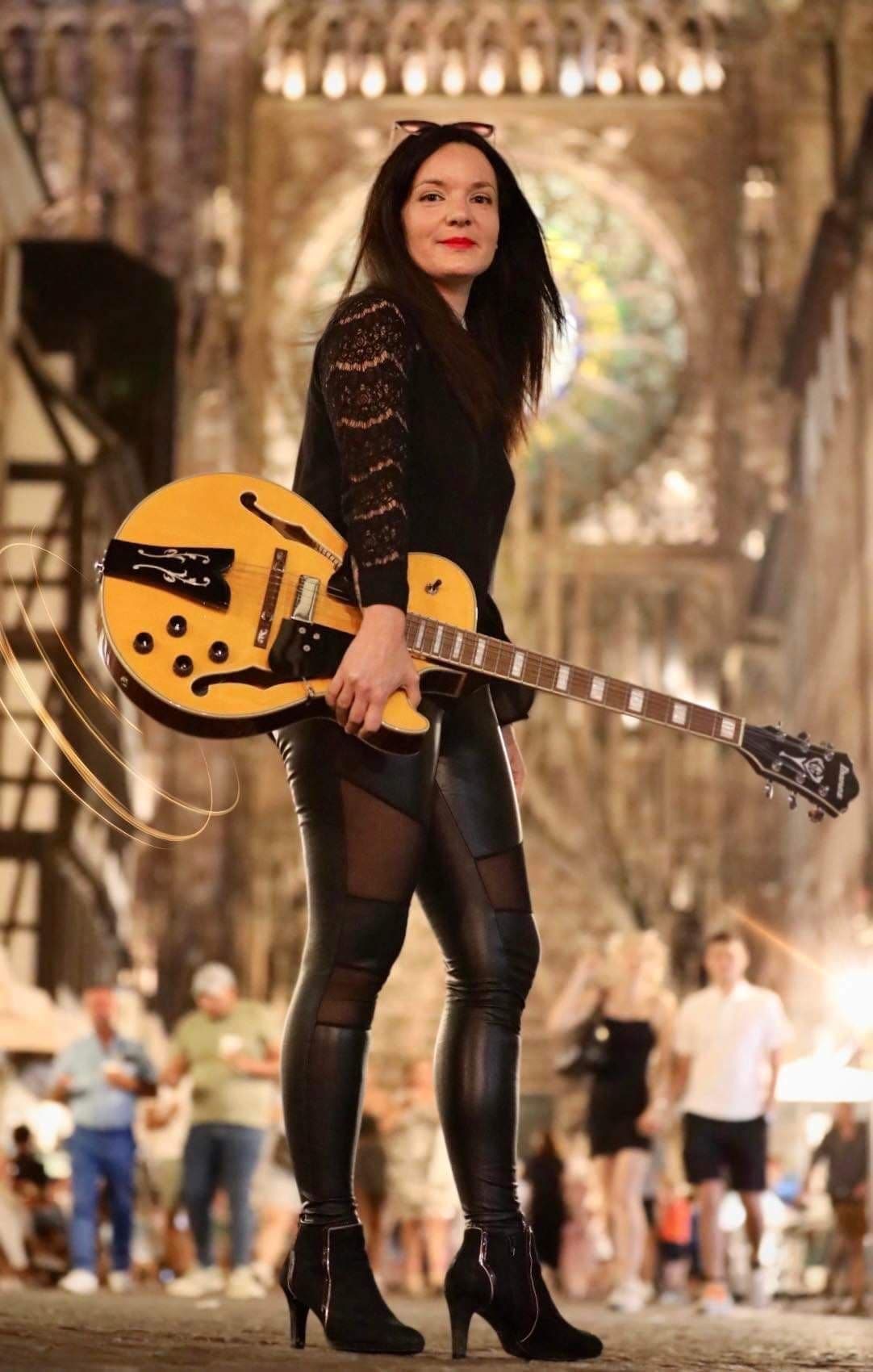
Photo Credit: Anas Alkhole
As someone who has gigged, taught, recorded, and composed — which of these roles currently brings you the most joy, and why?
Composing and performing on stage are like the two arms of the skeleton that made me fall in love with music in the first place. I won’t lie — that’s why I started!Teaching is something I’ve learned to love along the way. It brings you into contact with so many people you’d probably never meet otherwise. It challenges you to adapt, and sometimes, to find something to appreciate in someone you wouldn’t naturally connect with. There are times when you’re face to face with someone and you just know that, in a different context, it would’ve been really tough for the two of you to get along. And yet, in that moment, you have to think: I need to find a part of you that resonates with a part of me, so we can make this guitar lesson work.
Teaching really teaches you how to love people as they are. It also pushes you to explore artists or genres you might never have gravitated toward on your own.
You mentioned being inspired by concerts and new musicians. Has anyone or anything sparked that fire for you lately?
I recently had the chance to see a live performance by a guitarist from Strasbourg: Raïlo. He’s an incredible player, blending Gypsy jazz with a touch of New York-style jazz — very much in the spirit of Jonathan Kreisberg.His album Horse Blood is absolutely beautiful. Highly recommend checking it out!
Let’s talk gear. Any new pedals, guitars, or setups that have excited you recently? Or are you still loyal to your signature Ibanez?
I’m still working with Ibanez for electric guitars, and for the past few years, my main one has been the AZS2200. On the acoustic side, I was lucky enough to get a custom-made guitar from the French luthier François Baudemont (FB Lutherie). He built me a real gem — visually stunning and sonically rich. Here’s a little video link, if you’re curious.
Honestly, I haven’t gone too wild when it comes to gear — I think I’m starting to settle down a bit with the setup I have now 😂
Do you feel your audience has changed or grown in any way recently? Are you connecting with different demographics or scenes now?
Starting my own trio, based on my original compositions, has gradually helped me move out of the very guitar-centric scene I was in, and begin to enter more jazz-oriented circles. Things are evolving at their own pace, but I can definitely sense a shift happening.
You mentioned wanting to make a living purely off your own music. How close are you to that dream today — and what’s still missing?
It’s going to take a bit more time. I’m already really happy and grateful to make a living from music in general, but I can’t rely solely on my personal project just yet to earn a decent living.
For now, I still need to be involved in other musical projects alongside mine to keep things balanced.
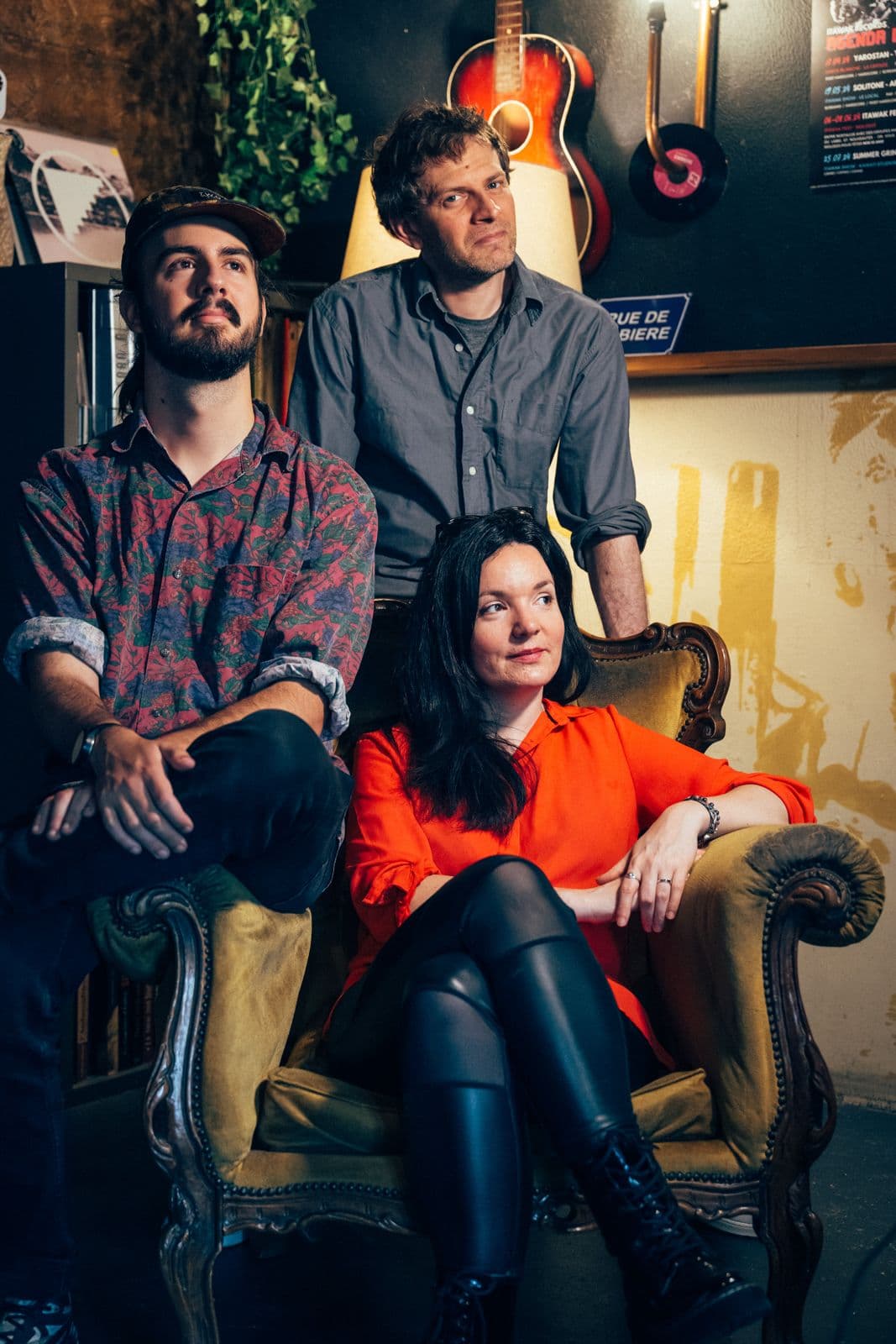
Photo Credit: Olivier Hoffschir
If you could change one thing about the current state of the music industry for independent artists, what would it be?
It would be great to lighten the administrative load so artists could really focus on creating.
A lot of independent artists end up managing everything — the creative side, the communication, the production, the paperwork… I’d love to see that reality acknowledged, and to see more tools or structures put in place to ease that burden.
And if I can dream a bit bigger — maybe even a little utopian — I wish music could be valued for more than just its profitability. Not only for how many views or streams it can generate.
Do you have a recent experience where your identity as a woman and a musician collided in an empowering way?
I was recently invited by Juan Carmona, the world-renowned flamenco guitarist.
He organized a concert featuring women guitarists, and it was such a beautiful experience to be there, on that stage, surrounded by so many talented women. It’s a musical and human memory I’ll never forget.
You’ve said music goes beyond borders. Have you had a recent international or cross-cultural project that brought that to life for you?
I’m also part of the United Guitars collective.
It’s a fantastic project created by Ludovic Egraz and Olivia Rivasseau, bringing together French and international guitarists.
On the latest release, we even had Franck Gambale involved!
The project blends different worlds, styles, guitarists — men and women — from all over.
I think it’s amazing to unite such a wide range of identities through the guitar!
Last time you told us your go-to power song was “Don’t Stop Believin’.” Is it still your anthem, or has something new taken over your playlist?
Yes, it’s still “Don’t Stop Believin’”!
When I need a little boost or some extra motivation, it’s still the song that carries me through!
Photo Credit: Olivier Hoffschir